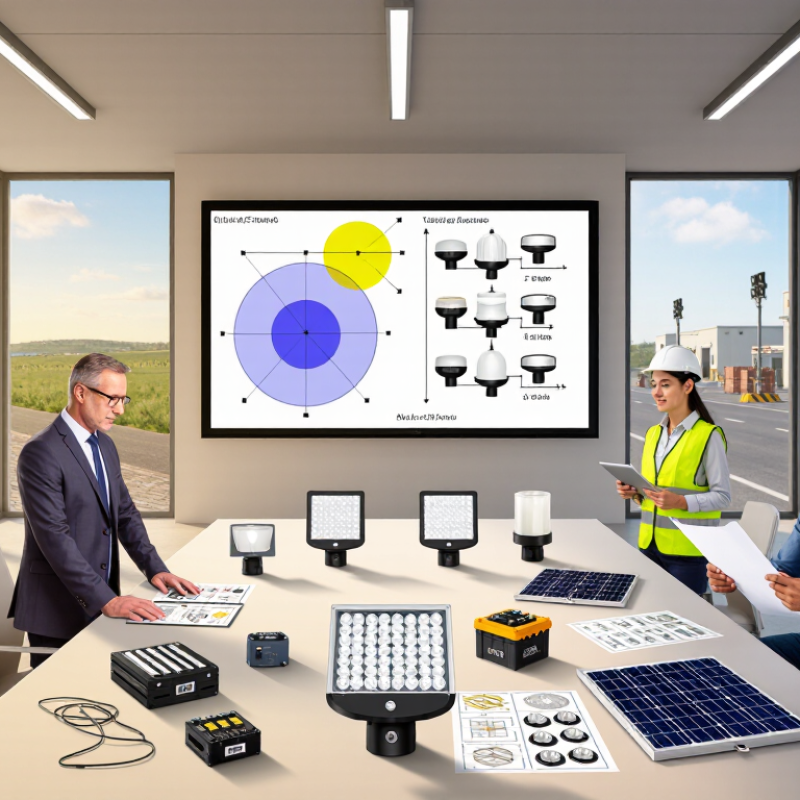
7 Best Tips to Compare Solar Light Suppliers?

Time:2026-10-11 Author:Sophia
0%

Choosing a solar light supplier can feel like comparing identical boxes. Each brochure promises bright output, long battery life, and simple installation. Real performance is rarely that simple. A coastal walkway, rural road, and factory yard require different designs, protection levels, and maintenance plans.

The practical question is: How to compare different solar light suppliers without trusting marketing alone? Dr. Steven J. Strong, a recognized solar-energy consultant, offers a useful principle: “A system must be designed for the site, not for the sales brochure.” That idea shapes this guide. It encourages buyers to examine lighting calculations, battery chemistry, panel quality, controller settings, and night-time performance. Ask for test reports. Request project references with similar weather and operating conditions. Inspect the warranty terms carefully. A five-year warranty means little if replacement shipping is unclear.

Look beyond the purchase price.

Supplier experience also matters. Check whether the company can provide photometric files, installation drawings, spare parts, and responsive technical support. A supplier with impressive products may still struggle with after-sales service. That possibility deserves attention. It is easy to overvalue a polished factory tour or a confident sales presentation. It is harder, but wiser, to verify delivered projects in person. The seven tips ahead offer a practical comparison framework. They are not perfect. Local conditions, budget limits, and changing technology can affect every decision. Still, careful questions usually reveal which supplier sells reliable lighting and which one mainly sells promises.

7 Best Tips to Compare Solar Light Suppliers?

Define Your Solar Lighting Needs and Project Requirements

Comparing solar light suppliers starts with a precise project brief. Define the location, road width, pole spacing, mounting height, and required lighting level. Record nightly operating hours and acceptable dimming periods. Coastal sites need corrosion resistance. Cold regions need battery performance data. Tip 1: Sketch one typical installation and mark shaded areas, trees, buildings, and maintenance access.

In field assessments, unclear requirements often create misleading quotations. A supplier may offer a lower price by assuming shorter autonomy or weaker illumination. Ask every supplier to calculate performance using identical inputs. Request photometric files, battery capacity, panel output, controller details, and expected autonomy. Do not rely on attractive product photographs. Measurements matter more. Tip 2: Compare test data for rainy nights, winter temperatures, and repeated cloudy days.

My own early mistake was treating wattage as proof of quality. It was not. Actual performance depended on optics, battery management, and installation angles. Review warranty terms, replacement procedures, delivery schedules, and technical support before comparing prices. A reliable supplier should explain assumptions clearly and revise calculations when site conditions change. Tip 3: Use a shared checklist, then score compliance instead of judging promises. Leave room for uncertainty; field conditions rarely match drawings perfectly.

Assess Supplier Product Quality, Performance, and Technical Specifications

7 Best Tips to Compare Solar Light Suppliers?

When comparing solar light suppliers, inspect measured performance rather than brochure claims. Ask for independent test reports covering luminous flux, battery capacity, charging time, and night-time autonomy. The International Energy Agency reports that LED lighting can deliver major efficiency gains, but fixture efficiency varies widely after optics and thermal losses. A bright lamp is not always an efficient lamp.

Check the photovoltaic module’s rated power, operating temperature, and degradation assumptions. NREL’s PV Lifetime Project commonly uses about 0.5% annual module degradation as a planning benchmark. Request the supplier’s actual warranty basis and test conditions. Battery chemistry matters too. Review cycle-life data, low-temperature performance, protection circuits, and replacement procedures. Small details matter. A weak connector can reduce output after heavy rain.

Technical compliance should include IEC 60598 safety testing, suitable IP protection, and documented EMC performance. For outdoor products, compare illumination uniformity, mounting height, beam angle, and delivered lumens, not only nominal wattage. Lighting Global quality testing also emphasizes battery, durability, and system performance checks for off-grid products. Ask for sample units and run a 30-day field trial. Record cloudy-day runtime, sensor response, charging recovery, and temperature changes. Supplier documents can be incomplete. That is worth questioning.

Compare Pricing, Warranty Coverage, and Total Ownership Costs

7 Best Tips to Compare Solar Light Suppliers?

Tip 1: Compare the complete price, not only the unit quote. Ask for panels, batteries, poles, controllers, shipping, installation, and replacement parts. A low initial price can hide weak batteries or costly freight. Request an itemized quotation with matching specifications. I once saw two similar proposals differ because one excluded trenching and commissioning. Small details matter.

Tip 2: Examine warranty coverage like a contract, not a sales promise. Check separate periods for the panel, battery, controller, lamp, and structure. Confirm whether labor, transport, and removal costs are included. Ask how claims are handled and where replacement parts are stored. A long warranty sounds impressive, but unclear exclusions reduce its practical value. Read the difficult sections.

Tip 3: Estimate total ownership costs over the lighting system’s expected life. Include energy savings, battery replacements, cleaning, inspections, software access, and repairs. Compare performance in cloudy weather, winter temperatures, and areas with dust. Ask suppliers for test data and references from similar sites. Numbers are useful, but field evidence is stronger.

Tip 4: Assess supplier reliability before signing. Review technical documents, installation records, response times, and after-sales support. Ask who will diagnose a nighttime failure. Calculate cost per illuminated year, not cost per fixture. My own comparison would include a maintenance reserve, because unexpected failures are easy to underestimate.

Verify Supplier Experience, Certifications, and Customer Support

7 Best Tips to Compare Solar Light Suppliers

Supplier experience is more useful when it can be checked. Ask how long the supplier has handled outdoor solar lighting projects. Request installation examples from similar climates and site conditions. Photos help, but signed customer references provide stronger evidence. A site with dusty roads, heavy rain, or weak sunlight can reveal practical experience. I once trusted a polished catalog too quickly, and the installation required unexpected battery replacements.

Review certifications carefully. A certificate logo alone proves little. Check the issuing organization, certificate number, testing scope, and expiration date. Ask whether the complete light system was tested, not only one component. Confirm that product specifications match the delivered model. Independent test reports can support claims about battery capacity, waterproof performance, and operating hours. Some documents may look impressive but contain outdated information.

Customer support should be tested before payment. Send several technical questions and record the response time. Clear answers usually show stronger product knowledge. Ask about warranty exclusions, replacement parts, repair procedures, and local technical assistance. A reliable supplier should explain what happens after installation, not only discuss price. Request a written service process with realistic response times. Small details matter. Still, no supplier performs perfectly; unclear answers deserve follow-up rather than immediate rejection. Compare the evidence, not the promises.

7 Best Tips to Compare Solar Light Suppliers

A practical evaluation framework for verifying supplier experience, certifications, and customer support.

The chart uses a 100-point evaluation framework. Give the highest priority to documented certifications, product quality controls, supplier experience, warranty coverage, and responsive customer support. Ask suppliers for verifiable documents, test reports, project references, and written service commitments before making a decision.

Evaluate Samples, Delivery Capability, and Long-Term Reliability

7 Best Tips to Compare Solar Light Suppliers?

A reliable comparison starts with physical samples, not polished catalogs. Request two or three units with identical specifications. Test brightness at dusk, charging time, motion detection, and battery performance. Check the housing for rough seams, loose screws, or weak seals. An IP rating is useful, but real rain exposure can reveal poor assembly. Measure light output after several cloudy days. Small details matter.

Ask suppliers how they manage delivery capability. Confirm monthly production capacity, component availability, packaging standards, and realistic lead times. Request a sample production schedule, not only a promised shipment date. Inspect carton protection and labeling before placing a large order. One delayed component can stop an entire batch. Also ask whether they can maintain the same battery and LED specifications over time.

Long-term reliability needs evidence. Review test records, replacement procedures, warranty terms, and response times. Speak with existing commercial customers when possible. A supplier should explain failure rates honestly, including common defects. Be cautious when every answer sounds perfect. No sample predicts every field problem. I once underestimated installation conditions; shaded areas reduced charging performance sharply. That mistake showed why site testing and maintenance planning belong in supplier evaluation. Compare written commitments with actual communication during the process. Fast replies are helpful, but accurate replies are better.

7 Best Tips to Compare Solar Light Suppliers? - Evaluate Samples, Delivery Capability, and Long-Term Reliability

A practical supplier comparison matrix based on sample evaluation, production capability, compliance documentation, and after-sales reliability.

No. Evaluation Tip What to Verify Supplier A Supplier B Supplier C Suggested Weight
1 Evaluate Samples Before Ordering Check illumination, charging performance, motion-sensor response, battery protection, housing finish, and installation quality using a physical sample. Strong
Sample supplied in 7 days; complete datasheet and test checklist included.
Acceptable
Sample supplied in 10 days; limited battery-cycle information.
Weak
Sample supplied in 14 days; several specifications remained unconfirmed.
20%
2 Confirm Technical Compliance Request relevant laboratory reports for electrical safety, ingress protection, electromagnetic compatibility, battery safety, and photovoltaic performance. Strong
Reports provided for IP65, EMC, battery safety, and LED electrical safety.
Acceptable
Basic safety documents provided; battery report requires verification.
Weak
Declarations supplied without complete independent test reports.
15%
3 Assess Delivery Capability Compare stated production capacity, standard lead time, peak-season planning, quality-control checkpoints, and backup component availability. Strong
Estimated production capacity: 20,000 units/month; standard lead time: 25–30 days.
Acceptable
Estimated capacity: 10,000 units/month; standard lead time: 35–40 days.
Weak
Capacity was not clearly documented; lead time quoted at 45–55 days.
15%
4 Check Battery and Lighting Performance Compare battery chemistry, rated capacity, operating temperature, autonomy after a full charge, lumen output, and expected service conditions. Strong
LiFePO₄ battery; claimed 2–3 nights of autonomy under specified operating conditions.
Acceptable
LiFePO₄ battery; claimed 1–2 nights of autonomy with fewer performance records.
Weak
Battery specification varied between quotation and sample documentation.
15%
5 Review Warranty and Spare Parts Confirm warranty duration, covered components, exclusions, replacement process, spare-part pricing, and repair instructions. Strong
3-year product warranty; replaceable controller, battery, and LED module options.
Acceptable
2-year warranty; spare-part availability confirmed for selected components.
Weak
Warranty terms were general and did not define component coverage.
15%
6 Measure Quality-Control Reliability Look for incoming-material inspection, production inspection, aging tests, waterproofing checks, final inspection records, and lot traceability. Strong
Multi-stage inspection process with final functional testing and batch records.
Acceptable
Routine inspection described; test-record format should be agreed before production.
Weak
Quality-control process was described broadly without sample records.
10%
7 Test Long-Term Communication and Service Evaluate response speed, engineering support, installation guidance, complaint handling, documentation quality, and willingness to support field testing. Strong
Technical replies within one business day; installation and troubleshooting documents provided.
Acceptable
Replies within two business days; technical support available during working hours.
Weak
Response times varied and escalation contacts were not clearly defined.
10%
Overall Assessment Recommended for pilot order Suitable after document verification Requires significant due diligence 100%
Recommended decision process: Shortlist suppliers that pass sample testing, document verification, and a small pilot order before committing to a large-volume purchase. Confirm all quoted specifications, lead times, warranty terms, and test requirements in the purchase contract.

FAQS

What details should a project brief include before comparing solar lighting suppliers?

Record location, road width, pole spacing, mounting height, and required illumination. Note nightly operating hours and acceptable dimming periods. Mark trees, buildings, shaded areas, and maintenance access. A rough sketch helps. Site drawings are never perfect.

How can suppliers be compared using the same technical assumptions?

Give every supplier identical site data and operating requirements. Request photometric files, battery capacity, panel output, controller details, and expected autonomy. Compare rainy nights, winter temperatures, and several cloudy days. Photos can mislead. Measurements matter more.

Which performance data should buyers request?

Ask for measured luminous output, charging time, battery capacity, and night-time runtime. Check illumination uniformity, beam angle, mounting height, and delivered lumens. Nominal wattage alone proves little. I learned that slowly.

What battery details are important for outdoor solar lighting?

Review battery chemistry, cycle-life data, low-temperature performance, and protection circuits. Confirm replacement procedures and expected service life. Cold weather can shorten nighttime operation. Small details matter.

How should environmental conditions affect supplier selection?

Coastal locations require corrosion-resistant materials and protected connections. Cold regions need verified battery performance at low temperatures. Dusty sites may require regular cleaning and inspections. Heavy rain can expose weak connectors. Weather changes everything.

What should a complete quotation include?

Request separate prices for panels, batteries, poles, controllers, shipping, installation, and replacement parts. Confirm whether trenching, testing, and commissioning are included. Two similar quotes may hide different costs. Read every line.

How should warranty coverage be evaluated?

Check separate warranty periods for the panel, battery, controller, lamp, and structure. Confirm coverage for labor, transport, removal, and replacement parts. Ask where spare parts are stored. A long warranty may still have difficult exclusions.

How can total ownership cost be estimated?

Include energy savings, battery replacements, cleaning, inspections, software access, repairs, and maintenance reserves. Compare cost per illuminated year, not only cost per fixture. Review similar project references and field results. I would allow extra budget. Unexpected failures are easy to underestimate.

Conclusion

Choosing the right solar light supplier requires more than comparing prices. Start by defining your lighting needs, installation environment, expected brightness, operating hours, battery performance, and project scale. Then assess each supplier’s product quality, technical specifications, energy efficiency, durability, and performance in different weather conditions. A reliable comparison should also include warranty coverage, replacement policies, maintenance requirements, and total ownership costs rather than focusing only on the initial purchase price.

To understand How to compare different solar light suppliers, verify their industry experience, certifications, production capabilities, and customer support services. Request product samples to evaluate real-world performance, construction quality, and ease of installation. You should also confirm delivery capacity, lead times, quality control procedures, and the supplier’s ability to provide consistent products for future orders. By reviewing these factors systematically, you can select a dependable supplier that offers suitable products, transparent costs, responsive service, and long-term project reliability.

Sophia

Sophia

Sophia is a dedicated marketing professional with an exceptional depth of knowledge about her company's products and services. With a keen understanding of market trends and customer needs, she crafts insightful blog posts that not only inform but also engage readers, enriching the company’s online......