10 Best Tips for Solar Lights Performance in Cloudy Weather?

Time:2026-05-25 Author:Sophia
0%

Solar lights are a great energy-efficient option for outdoor lighting. But how do solar lights work in cloudy weather? To understand this, we consulted Dr. Emily Carter, a renewable energy expert. She states, “Solar lights can still function in cloudy conditions, but their efficiency diminishes.”

Many people underestimate the effectiveness of solar lights during overcast days. While sunlight is crucial for their performance, solar panels can still collect dispersed daylight. This means they are not entirely ineffective when the sun hides. However, long periods without direct sunlight can lead to decreased battery charge and shorter illumination times.

It's essential to select solar lights with high-quality batteries and efficient solar panels. Look for lights designed specifically for low-light conditions. Regular maintenance is also crucial. Dust or debris on solar panels can further reduce their efficiency. Understanding how different weather conditions impact solar lights can significantly enhance their performance, especially in unpredictable climates.
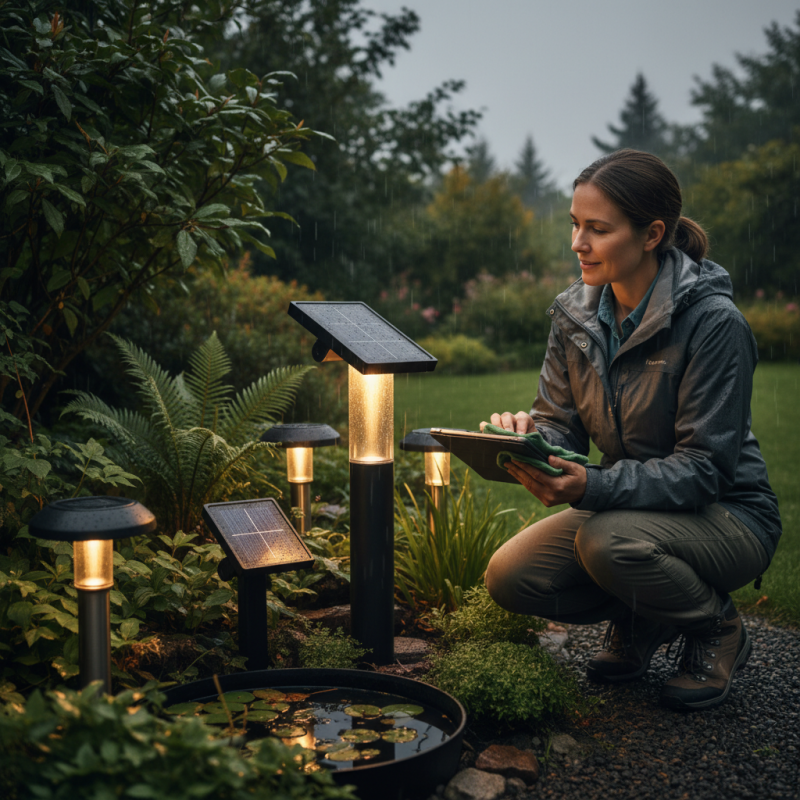
10 Best Tips for Solar Lights Performance in Cloudy Weather?

Understanding Solar Light Functionality in Cloudy Conditions

Cloudy weather can challenge the performance of solar lights. These lights rely on sunlight to charge their batteries. In overcast conditions, solar panels receive less light, which can limit their efficiency. Understanding how solar lights function is essential for maximizing their use.

Positioning solar panels correctly can enhance performance. Aim them toward the sunniest spot, even in cloudy days. Additionally, keeping the panels clean allows more sunlight to penetrate. Regular maintenance helps in optimizing energy absorption.

Another important tip is to choose solar lights with larger batteries. Bigger batteries can store energy more effectively, providing longer illumination hours. Investing in quality products will often yield increased reliability. Implementing these strategies can significantly improve how solar lights perform, even when the sun isn’t shining brightly.

10 Best Tips for Solar Lights Performance in Cloudy Weather

Tip Number Tip Description Expected Outcome Implementation Difficulty
1 Optimize Solar Panel Orientation Maximized sun exposure Medium
2 Clean Solar Panels Regularly Increased efficiency Easy
3 Use High-Quality Batteries Longer light duration Medium
4 Install Solar Lights in Open Spaces Better light output Easy
5 Consider a Dual-Function Light Enhanced performance Hard
6 Adjust Settings for Low Light Conditions Improved adaptability Medium
7 Choose Solar Lights with Motion Sensors On-demand lighting Easy
8 Select Lights with Built-in Solar Storage Increased usability Medium
9 Utilize Solar Lights with Extra Bright LEDs Bright illumination Medium
10 Experiment with Different Locations Optimal placement Easy

Factors Impacting Solar Panel Efficiency During Overcast Weather

Cloudy weather can significantly impact solar panel efficiency. The amount of sunlight absorbed by solar panels decreases during overcast days. This means that energy production may not meet expectations. Factors like cloud density and type play a crucial role. Thick, dark clouds block more sunlight than lighter ones. Additionally, the angle of sunlight changes, reducing efficiency further.


To improve solar light performance in cloudy conditions, consider positioning your solar panels at an optimal angle. This allows for better sunlight capture even on overcast days. Regular maintenance is also vital. Clean solar panels to maximize exposure and efficiency. Dirt and debris can accumulate, significantly reducing performance.


Another tip is to invest in high-efficiency solar panels. They are designed to capture more sunlight, even in less-than-ideal conditions. Battery storage systems can also be beneficial. They store excess energy generated during sunny days for use when the weather is cloudy. Monitoring weather patterns can help you manage energy consumption effectively. Understanding these factors can lead to smarter choices and improved solar light performance, even when the skies are gray.

Optimal Solar Panel Specifications for Increased Cloudy Weather Performance

When choosing solar panels for cloudy weather, consider specific specifications that enhance performance. High-efficiency solar panels can capture more light, even when skies are gray. Look for panels with monocrystalline technology. These panels tend to perform better in low-light conditions. Their design allows them to convert more sunlight into electricity, making them a reliable choice.

Another crucial factor is the wattage rating of the panels. Higher wattage panels can produce more energy, which is beneficial during those overcast days. Additionally, ensure that the panels have a good temperature coefficient. This indicates how well they perform in varying temperatures. Efficient cooling helps maintain output, even when the weather is not ideal.

Moreover, positioning the panels correctly is key. Angling them towards the sun can vastly improve collection. Regular maintenance is also necessary to keep them clean and functional. Cloudy weather might reduce energy production, but investing in the right specifications can make a significant difference. Always think critically about what works best for your environment. Performance won’t be perfect, especially in poor weather, but these steps can help.

Maintenance Practices to Enhance Solar Light Performance in Low Light

In cloudy weather, solar lights may not perform at their best. However, proper maintenance can enhance their efficiency. Regularly cleaning solar panels is crucial. Dust, leaves, and debris can block sunlight. Studies suggest that a clean solar panel can improve energy absorption by up to 30%.

Battery health is another significant factor. It’s essential to check and replace the batteries when they weaken. According to industry statistics, a good battery can last between three to five years. Keeping them in optimal condition ensures consistent light output, even during low sunlight.

Additionally, consider the placement of solar lights. Positioning them in areas with partial shade can still be effective. Regularly reassess their locations to maximize sunlight exposure. Taking these simple yet effective steps can significantly improve solar light performance. Remember, maintenance is not just about cleaning; it also involves understanding the components and their functions.

Future Trends in Solar Technology for Improved Performance in Cloudy Environments

Cloudy weather often challenges solar technology. However, advancements are on the horizon. Recent studies forecast a significant improvement in solar panel efficiency under low-light conditions. Researchers from the National Renewable Energy Laboratory found that new materials, like perovskite cells, could boost energy conversion rates by up to 25% in overcast conditions.

Innovative designs are also emerging. Bifacial solar panels, which capture sunlight on both sides, can increase power generation even with diffuse light. According to a report by the International Energy Agency, these panels can improve annual energy yield by up to 30% in regions with less sunlight. As technology evolves, solar lights will adapt, providing reliable solutions regardless of weather conditions.

Yet, there's room for improvement. Current systems still struggle to maintain performance during prolonged cloudy days. Consumers often express frustration over inconsistent light intensity. Addressing these issues will require further innovation and rigorous testing. In the battle against cloudy skies, harnessing energy more efficiently is essential for future solar technology.

FAQS

: How do cloudy conditions affect solar lights?

: Cloudy weather reduces sunlight exposure, limiting the efficiency of solar lights.

What can enhance solar panel performance when it's cloudy?

Position solar panels toward the sunniest spots, even in overcast conditions.

How important is cleanliness for solar panels?

Regular cleaning can improve energy absorption by up to 30%.

What should I consider regarding solar light batteries?

Larger batteries store more energy, providing longer illumination during low sunlight.

How often should batteries be checked?

Batteries should be checked and replaced every three to five years for optimal performance.

Is partial shade good for solar lights placement?

Yes, placing lights in partial shade can still yield effective performance.

What recent advancements are there in solar technology?

New materials and bifacial panels are improving solar efficiency under low-light conditions.

Do current solar systems perform well during extended cloudy periods?

No, they often struggle with light intensity during prolonged cloudy days.

How could solar technology improve in the future?

Continued innovation is needed to maintain performance during less ideal weather conditions.

What are common consumer frustrations with solar lights?

Inconsistent light intensity, especially during cloudy days, is a frequent complaint.

Conclusion

Solar lights are designed to harness sunlight for energy, but their efficiency can be significantly reduced in cloudy weather. Understanding how solar lights work in cloudy weather involves recognizing that solar panels utilize both direct and diffuse sunlight. Factors such as panel angle, quality, and size can greatly impact energy absorption during overcast conditions. Optimal solar panel specifications, including enhanced light sensitivity and higher efficiency ratings, can lead to better performance even when sunshine is limited.

Maintenance practices, such as regular cleaning and ensuring unobstructed sunlight access, can further enhance solar light performance in low light conditions. As solar technology continues to evolve, future trends promise innovations that will improve the functionality of solar lights in cloudy environments, allowing users to optimize energy use and maintain illumination throughout varied weather scenarios.

Sophia

Sophia

Sophia is a dedicated marketing professional with an exceptional depth of knowledge about her company's products and services. With a keen understanding of market trends and customer needs, she crafts insightful blog posts that not only inform but also engage readers, enriching the company’s online......