When considering solar lights, understanding "what certifications should high-quality solar lights have" is crucial for buyers. The solar lighting industry indicates that certified products perform better and last longer. For instance, a report by the Solar Energy Industries Association (SEIA) shows that certified solar products have a failure rate up to 30% lower than non-certified alternatives. This highlights the importance of choosing wisely.
Buyers should look for certifications like UL (Underwriters Laboratories) and IEC (International Electrotechnical Commission). These certifications ensure safety, efficiency, and environmental compliance. Furthermore, with the rise of smart solar technology, certifications for wireless connectivity and battery storage are increasingly vital. It's vital to notice that not all sellers exhibit these certifications. This gap can lead to confusion and disappointment.
Investing in solar lights without proper certification can lead to subpar performance. In some cases, this results in additional costs for replacements. Educated choices safeguard your investment. Always verify the certifications listed before purchase. This practice provides peace of mind and ensures that your solar lights meet industry standards.
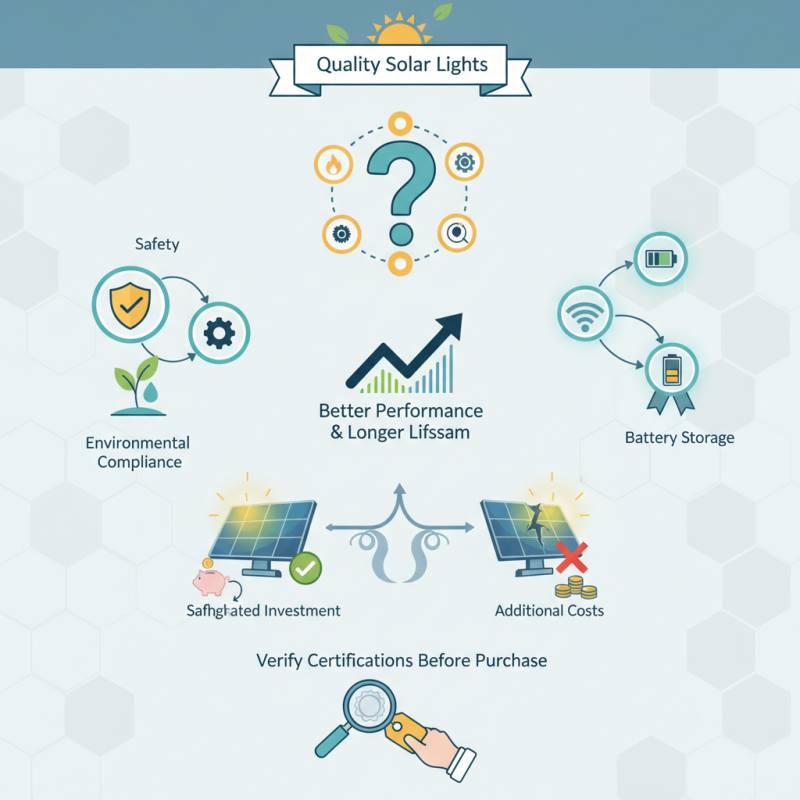
When it comes to purchasing solar lights, understanding certification types is essential. Certifications ensure that products meet specific quality and safety standards. This can significantly impact their longevity and performance. Look for certifications like UL, IEC, and Energy Star. These labels often indicate that the product has undergone rigorous testing.
Consumers may overlook some lesser-known certifications, which could be a mistake. For example, the CE mark signifies compliance with European standards, while the FCC certification relates to electronic device interference. Not all lights require every certification. Knowing which ones are important can save you from future problems. Consumers should also be aware that a lack of certification does not always mean a product is inferior; yet, it may point to potential safety or performance issues.
Another critical aspect is the failure rate of certain solar lights. Some products may perform excellently at first but fail within a year. Keeping an eye on customer reviews can guide buyers. Yet, not all reviews are trustworthy. Fake reviews sometimes masquerade as real experiences. It's essential to dig deeper and ensure that you are getting a reliable product. A little research can go a long way in making the right choice for your solar lighting needs.
Energy efficiency certifications are crucial when selecting solar lights. They indicate that products meet specific performance thresholds, ensuring optimal energy consumption. According to the U.S. Department of Energy, efficient lighting can reduce energy use by up to 75%. Such statistics highlight the importance of seeking certified products.
Certification labels, like ENERGY STAR, help consumers identify reliable options. These labels mean the product has undergone rigorous testing. In fact, a study by the Global Lighting Association found that certified lighting solutions can lower operational costs significantly. This is not just about saving money; it also contributes to environmental sustainability.
However, not all products labeled as "energy-efficient" are equal. Some may falsely claim efficiency without proper validation. This creates a need for vigilance among buyers. Knowing which certifications are legitimate can prevent consumers from making poor choices. Current trends show a growing demand for transparency in product labeling, reflecting consumers' desire for trustworthy information regarding energy use and sustainability.
When considering solar lights, safety standards play a crucial role. Products should meet rigorous safety certifications to ensure consumer protection. According to the International Electrotechnical Commission (IEC) standards, solar lights undergo stringent testing for electrical safety. These tests evaluate the risk of electric shock and fire hazards. Reports indicate that over 25% of solar lighting products fail to meet these standards.
Moreover, it's vital for buyers to check for certifications like UL or CE. These marks signify compliance with international safety regulations. Solar lights with these certifications are less likely to pose safety risks. A survey by the National Renewable Energy Laboratory found that consumers reported feeling safer using certified solar products. This trust stems from the assurance these standards provide.
Yet, not all manufacturers prioritize safety certifications. Some may cut corners, leading to subpar products. Lack of transparency in safety practices raises concerns for potential buyers. A study highlighted that roughly 30% of users had issues with unverified solar lights, emphasizing the need for due diligence. Quality certifications are not just a checkbox; they are a promise of reliability and safety.
| Certification | Description | Importance |
|---|---|---|
| UL Certification | Ensures products meet safety standards for electrical devices. | Indicates electrical safety and reliability. |
| CE Marking | Indicates conformity with health, safety, and environmental protection standards for products sold within the European Economic Area. | Essential for legal sale in Europe. |
| FCC Compliance | Demonstrates that the electromagnetic interference emitted by the product is under limits approved by the FCC. | Critical for use in the United States. |
| RoHS Compliance | Regulates the use of certain hazardous substances in electrical and electronic equipment. | Promotes environmentally friendly materials. |
| IP Rating | Measures the degree of protection against dust and water. | Indicates durability for outdoor use. |
When choosing solar lights, environmental sustainability certifications are crucial. These certifications indicate a commitment to eco-friendly practices. They often reflect energy efficiency, materials used, and overall environmental impact. Buyers should look for reputable labels that ensure compliance with sustainability standards.
Certification bodies evaluate products on various criteria. They assess the lifecycle of materials, energy consumption, and emission levels. A product with certifications shows that it meets strict guidelines. However, not all certifications are equal. Some may lack rigorous testing standards. Research is essential to confirm the credibility of these labels before making a purchase.
While many products claim sustainability, real impact varies. Some might meet basic criteria but still rely on non-renewable materials. Understanding these nuances helps make informed decisions. Look for products that not only carry certifications but demonstrate a genuine commitment to sustainability. This ensures your choice contributes positively to the environment.
When choosing solar lights, understanding manufacturer certifications is crucial. Certifications authenticate a manufacturer's commitment to quality and safety standards. For instance, solar lights that comply with the International Electrotechnical Commission (IEC) guidelines ensure reliable performance. According to a report by the Global Solar Council, products with relevant certifications see significantly fewer defect rates and higher customer satisfaction.
Certifications like Underwriters Laboratories (UL) and CE mark represent rigorous testing. These ensure that products meet international safety requirements. However, consumers often overlook these important certifications. A survey revealed that nearly 30% of buyers prioritize price over quality. This can lead to acquiring inferior products.
**Tip:** When considering solar lights, always check for these crucial certifications. A trusted product may save you money and headaches in the long run.
Moreover, be cautious of brands that don't provide clear certification information. Transparency matters. A lack of documentation could indicate shortcuts in manufacturing. Understanding these certifications can help you make informed purchasing decisions. You deserve reliable and durable solar lighting for your needs.
: Certifications ensure solar lights meet quality and safety standards. They impact longevity and performance.
Look for certifications like UL, IEC, and Energy Star. These indicate rigorous product testing.
Yes, but a lack of certification may suggest potential safety or performance issues. Buyer beware.
Reviews can guide choices, but beware of fake reviews. Research thoroughly before deciding.
The CE mark indicates compliance with European safety standards. It’s crucial for buyers to know.
They show products that meet performance standards, potentially reducing energy use by up to 75%.
Not always; some products falsely claim efficiency. Vigilance is essential when assessing labels.
It may lead to buying inferior products that don’t last or perform well. Value is key.
Clear certification info helps avoid shortcuts in manufacturing, ensuring you buy reliable products.
Be cautious; lack of documentation can indicate potential issues with quality and safety.
When considering "What certifications should high-quality solar lights have," it is essential to understand the various certification types that signify reliability and performance. Key certifications include energy efficiency ratings, which indicate how well a solar light converts sunlight into usable energy, ensuring cost savings and eco-friendliness. Safety standards are equally important, as they demonstrate that the product has undergone rigorous testing to prevent hazards such as electrical failures or fire risks.
Additionally, environmental sustainability certifications assess the product’s overall impact on the environment, guiding buyers toward eco-conscious choices. Lastly, recognizing the trustworthiness of manufacturers through their certifications can provide assurance regarding the quality and durability of solar lights. Engagement with these aspects enables consumers to make informed decisions when selecting high-quality solar lighting solutions for their needs.

Midmo Lights