How to Improve the Efficiency of Solar Lights?

Time:2026-09-21 Author:Henry
0%

Solar lights offer clean, convenient illumination, but their performance can decline quietly. A shaded panel, dusty surface, weak battery, or poorly positioned fixture can reduce nighttime brightness.

How to improve the efficiency of solar lights depends on more than choosing a brighter LED. The entire system must work together. Solar panels need several hours of direct sunlight, while batteries require suitable capacity and protection from extreme temperatures. Clean panels regularly, remove nearby obstructions, and place each light where sunlight reaches it consistently. Even a small branch can shorten charging time during winter.

Battery condition matters greatly. A worn battery may appear functional but store too little energy for a full night. Replacing it with the correct chemistry, voltage, and capacity can restore useful performance. Efficient LEDs, intelligent charging circuits, and motion sensors may also reduce unnecessary power consumption. However, brighter is not always better. Excessive brightness can drain the battery faster and create unwanted glare.

This guide combines practical installation advice with basic electrical principles. It focuses on measurable improvements, including longer runtime, steadier brightness, and reduced maintenance. Results will vary with weather, location, product quality, and seasonal sunlight. That uncertainty matters. A solution that works in a dry garden may perform poorly in a shaded, humid courtyard. Some recommendations may also need adjustment after observation. Monitor the light for several nights, record its runtime, and refine the setup based on real conditions. Small changes often produce the most reliable gains.
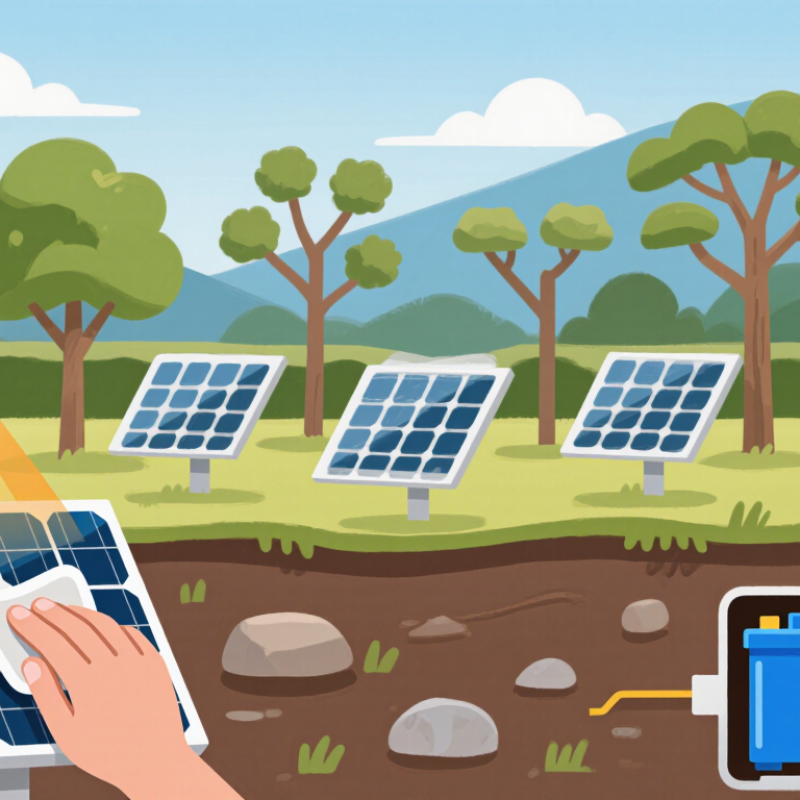
How to Improve the Efficiency of Solar Lights?

Define Solar-Light Efficiency Using Lumens per Watt and Daily Energy Yield

How to Improve the Efficiency of Solar Lights?

Define Solar-Light Efficiency Using Lumens per Watt and Daily Energy Yield

Solar-light efficiency should be measured with two practical figures: lumens per watt and daily energy yield. Lumens per watt shows how much visible light the lamp produces from each watt of electrical power. For example, an 800-lumen lamp using 8 watts delivers 100 lumens per watt. This figure helps compare LED performance, but it does not describe the entire solar system.

Daily energy yield shows how much useful energy the system supplies in one day. A lamp consuming 8 watts for ten hours needs 80 watt-hours. In real conditions, dimming, battery losses, cloudy weather, and controller efficiency reduce that amount. A measured output of 55 watt-hours may therefore be more realistic. Measure energy at the lamp, not only at the solar panel.

Small details matter.

A field test should record light output, operating hours, battery voltage, and weather conditions. Dust on the panel, shade from a nearby tree, or a cold battery can reduce performance noticeably. Clean the panel regularly and check whether the lamp dims after midnight. This often reveals poor energy planning.

A higher lumen rating is not always better. Excessive brightness can waste stored energy and create uncomfortable glare. Selecting the lowest useful brightness may extend nightly operation. The calculation can still mislead when tests use ideal conditions. Repeating measurements across several nights gives more dependable results, although even careful testing cannot remove every seasonal variation.

Select High-Efficacy LEDs Delivering Approximately 100–200 Lumens per Watt

How to Improve the Efficiency of Solar Lights?

Select high-efficacy LEDs delivering approximately 100–200 lumens per watt. This range helps solar lights produce stronger illumination from limited battery energy. The U.S. Department of Energy’s 2023 Solid-State Lighting R&D Opportunities report indicates that advanced LED packages can exceed 200 lumens per watt under controlled laboratory conditions. Real outdoor fixtures usually perform lower. Lenses, thermal conditions, wiring, and driver losses reduce delivered light.

Choose LEDs with stable output at practical operating temperatures. A bright test result may not represent performance on a cold winter night or a hot summer wall. The Illuminating Engineering Society recommends evaluating lighting systems through measured photometric data, not package claims alone. Check the complete fixture efficacy, measured in lumens per watt, rather than judging the LED chip separately. A 160-lumen-per-watt source may deliver only 120 lumens per watt after optical and electrical losses.

Tips: Compare independent test reports. Ask for LM-79-style fixture measurements when available. Keep the solar panel clean and unobstructed. Use a properly sized battery, because excessive brightness can shorten nighttime runtime. I sometimes favor 140 lumens per watt over 200, if the lower figure stays stable throughout the night. Efficiency is not just a peak number. It is dependable light at 2 a.m.

Optimize Solar Panels Within the Typical 15–23% Photovoltaic Efficiency Range

How to Improve the Efficiency of Solar Lights?

Solar lights perform best when their photovoltaic panels receive direct, unobstructed sunlight. Typical panels convert about 15–23% of sunlight into electricity under controlled testing conditions. Real outdoor performance is usually lower. Heat, dust, cloudy weather, and imperfect panel angles reduce daily energy production. A panel facing the strongest midday sun often charges more effectively than one placed near a shaded wall.

Tips: Clean the panel with a soft, damp cloth every few weeks. Remove leaves, bird droppings, and dust carefully. Keep nearby branches trimmed, especially during summer growth. Adjust the panel toward the sun’s path, not toward attractive landscaping. Even a small shadow can reduce output sharply. Avoid placing lights beneath roof edges or dense trees.

Battery condition also affects efficiency. A weak battery may store less energy, even when the panel works correctly. Check whether the light remains bright after a full sunny day. If brightness fades quickly, inspect the battery, wiring, and light sensor. Lowering the brightness setting can extend nighttime operation, but it may reduce visibility. This trade-off is easy to overlook. I have found that perfect positioning is rarely possible, especially in narrow gardens. Measure results over several clear days instead of trusting one afternoon. Small changes often reveal more than expensive replacements.

How to Improve the Efficiency of Solar Lights? - Optimize Solar Panels Within the Typical 15–23% Photovoltaic Efficiency Range
Optimization Dimension Representative Data Range Practical Efficiency Impact Recommended Design or Maintenance Action Technical Basis
Photovoltaic conversion efficiency 15–23% under standard test conditions Defines the theoretical electrical output from incident solar energy. Select a module whose rated efficiency matches the available installation area and required light output. Commercial crystalline-silicon modules commonly fall within this broad range; rated values are measured at standard test conditions.
Standard test irradiance 1,000 W/m² Provides the reference condition for comparing rated module power. Use local solar-resource data rather than rated power alone when sizing a solar light. Standard test conditions generally use 1,000 W/m² irradiance, 25°C cell temperature, and an AM1.5 reference spectrum.
Solar-panel orientation Face the panel toward the equator; avoid persistent obstructions Improves daily solar exposure and reduces cosine losses caused by steep incidence angles. Use a fixed tilt close to the site’s latitude as a starting point, then refine it for seasonal lighting demand and local conditions. The optimum fixed angle depends on latitude, season, roof geometry, and whether winter or summer energy is more important.
Partial shading Avoid any recurring shade during peak solar hours Small shaded areas can cause a disproportionate drop in power, especially in series-connected cells. Keep trees, poles, walls, and nearby fixtures outside the panel’s solar path; use module-level mitigation where appropriate. Cells and substrings connected in series are limited by the lowest-performing section unless bypass or power-management measures reduce the effect.
Cell-temperature effect Approximately −0.25% to −0.45% power per °C above 25°C Hot panels generally produce less power than their nameplate rating suggests. Allow airflow beneath the panel and avoid mounting arrangements that trap heat. The exact temperature coefficient varies by photovoltaic technology and module construction.
Surface cleanliness Dust and soiling losses commonly range from a few percent to more than 10% in severe conditions Deposits reduce the light reaching the cells and may create uneven shading. Inspect the panel regularly and clean it with water and a soft, non-abrasive tool when soiling is visible or output declines. Losses depend on rainfall, dust type, panel tilt, nearby traffic or construction, and cleaning frequency.
Charge-controller tracking MPPT controllers typically harvest more available energy than simple PWM control when panel and battery voltages differ Improves energy transfer across changing irradiance and temperature conditions. Use an appropriately rated MPPT controller when the panel voltage is substantially higher than the battery charging voltage. MPPT continuously adjusts the operating point toward the panel’s maximum-power voltage; actual gains depend on system voltage, weather, and controller quality.
Power-cable voltage drop Target less than 2–3% in low-voltage DC circuits Reduces energy lost as heat between the panel, controller, battery, and lamp. Keep cable runs short, select an adequate conductor cross-section, and use secure, weather-resistant connections. Voltage drop increases with current, cable length, and conductor resistance; low-voltage systems are especially sensitive.
Battery charging reserve Size storage for the required night load plus at least 1–2 days of weather reserve Prevents lighting interruptions after cloudy or rainy periods. Base battery capacity on measured nightly energy use, allowable depth of discharge, temperature, and local consecutive low-sun conditions. Usable battery energy is lower than nominal capacity because of depth-of-discharge limits, temperature, aging, and conversion losses.
LED lighting efficiency System efficacy commonly ranges from approximately 80–180 lm/W, depending on the complete luminaire Higher efficacy produces more light from the same stored battery energy. Choose efficient LEDs with suitable optical distribution, and avoid excessive brightness that increases nightly energy demand. The complete system’s efficacy includes LED, driver, thermal, optical, and control losses; it is not the same as LED chip efficacy.
Lighting schedule and dimming Dimming to 30–70% output during low-traffic hours can substantially reduce energy use Extends operating time and preserves battery charge for later hours. Use motion sensors, timers, or adaptive dimming while maintaining the required safety and illumination level. Energy savings depend on the dimming level, active hours, detection frequency, and local lighting requirements.
System derating allowance Plan for approximately 10–25% combined real-world losses Produces a more reliable energy budget than using panel nameplate power alone. Include temperature, dust, wiring, controller, battery, mismatch, aging, and low-irradiance effects in the design calculation. Actual losses vary by climate, component selection, installation quality, and maintenance conditions.

Improve Battery Performance with 90–95% Efficient Lithium-Ion Storage

How to Improve the Efficiency of Solar Lights?

Solar lights lose useful energy when their batteries charge poorly or discharge too quickly. Lithium-ion storage can achieve about 90–95% round-trip efficiency in a well-designed system. That means most captured solar energy returns to the lamp after charging and storage. However, this figure is not guaranteed. Temperature, battery age, wiring resistance, and the charge controller all affect performance. A battery exposed to strong heat may accept energy less efficiently. Cold conditions can also reduce available capacity.

In practical installations, keep the battery away from direct heat and standing moisture. Use a charge controller matched to the battery chemistry and panel output. Avoid deep discharges whenever possible. Frequent full depletion creates more stress than regular, moderate cycling. Clean the solar panel regularly, because dust reduces charging power before the battery even begins working. Small losses add up.

Tips: Choose a lithium-ion battery with documented efficiency data. Check its operating temperature range. Inspect connectors for corrosion. Do not rely on the highest advertised percentage alone. A 95% rating may reflect laboratory conditions, not a shaded garden light after several seasons. I would leave a safety margin when sizing storage. Slightly more capacity can maintain brightness during cloudy periods, though oversized batteries may charge too slowly. Monitor nighttime runtime, not only daytime charging. That simple check often reveals hidden losses.

Use MPPT Charging, Smart Dimming, and Motion Sensors to Reduce Energy Losses

How to Improve the Efficiency of Solar Lights?

Solar lights lose energy through charging, conversion, and unnecessary nighttime operation. MPPT charging helps the controller track the panel’s best voltage and current point. This matters during cloudy mornings or cold weather. PWM charging is simpler, but it can waste available panel power. Real-world gains vary. A 10–30% improvement is possible, but it is not guaranteed.

The International Energy Agency reports that lighting uses about 15% of global electricity. Solar systems need tighter control because their batteries have limited capacity.

Smart dimming can lower brightness after midnight, when paths are less busy. Motion sensors can restore full brightness when people approach. The U.S. Department of Energy’s solid-state lighting research shows that controls can significantly reduce lighting energy use. However, poor sensor placement creates false triggers. That wastes power.

Tips:

Set a lower standby level, such as 20–30% brightness. Use a short detection period, around 30–60 seconds. Measure battery voltage, charging current, and overnight runtime for several weeks. NREL performance guidance also supports site-specific solar assessment instead of relying on rated panel output. Dust, shade, and winter angles change the result. One useful reminder: the brightest setting is rarely the most efficient. A dimmer light can feel safer when it responds at the right moment.

FAQS

How is solar-light efficiency measured?

Use lumens per watt and daily energy yield. Lumens per watt measures visible light from each electrical watt. Daily yield measures useful energy delivered in one day. Both figures matter.

What does 100 lumens per watt mean?

An 800-lumen lamp using 8 watts produces 100 lumens per watt. This compares lighting performance. It does not describe the entire solar system.

How much energy does a lamp need overnight?

An 8-watt lamp running for ten hours needs 80 watt-hours. Real output may reach only 55 watt-hours. Dimming, battery losses, clouds, and controller losses reduce energy.

Where should energy output be measured?

Measure energy at the lamp, not only at the panel. The lamp reveals actual useful output. Panel readings can look better than nighttime performance.

How can I test a solar light outdoors?

Record brightness, operating hours, battery voltage, and weather. Check the light after midnight. Repeat the test across several nights. One sunny afternoon can mislead you.

How efficient are typical photovoltaic panels?

Typical panels convert about 15–23% of sunlight under controlled conditions. Outdoor results are usually lower. Heat, dust, clouds, and poor angles reduce daily production.

How does shading affect a solar panel?

Even a small shadow can sharply reduce output. Keep panels away from roof edges, dense trees, and shaded walls. Trim branches during summer growth.

How can I maintain the panel and battery?

Wipe the panel with a soft, damp cloth every few weeks. Remove leaves and dust carefully. If brightness fades quickly, inspect the battery, wiring, and sensor. Perfect positioning is rarely possible.

Conclusion

How to improve the efficiency of solar lights begins with measuring performance through lumens per watt and daily energy output. Choose high-efficacy LEDs that can produce approximately 100–200 lumens per watt, allowing the light to deliver greater brightness while consuming less electricity. Solar panels should also be selected and positioned carefully, with typical photovoltaic efficiency ranging from 15% to 23%. Proper installation, including a clear orientation toward direct sunlight, can improve energy collection throughout the day.

Battery performance is another essential factor. Lithium-ion batteries with around 90–95% charging and discharging efficiency can store more usable energy and reduce power loss. In addition, MPPT charging technology helps the system harvest solar energy more effectively under changing conditions. Smart dimming can lower brightness when full illumination is unnecessary, while motion sensors activate stronger lighting only when movement is detected. Together, these measures reduce energy waste, extend operating time, and improve the overall reliability of solar lights.

Henry

Henry

Henry is a dedicated marketing professional with a profound expertise in the company's offerings. With years of experience in the industry, he possesses an impressive understanding of the market dynamics and consumer behaviors that drive success. Henry is committed to sharing his insights through......