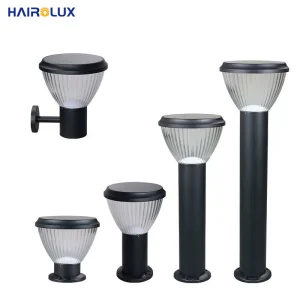
Midmo Lights
High-Lumen & Architecturally Integrated Solar Luminaires
Engineered for commercial specification, urban landscaping, and residential landscape distribution. Incorporating premium cell topologies and smart charge algorithms.
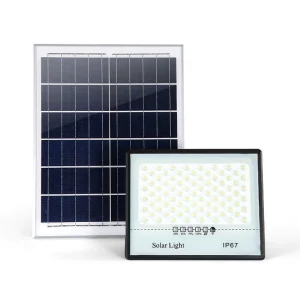
Premium Solar Powered Outdoor Landscape Lighting Solar Flood Light
View Specifications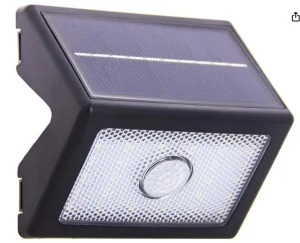
Wall Light Solar Black Sensor 400 Lumens 5000K
View Specifications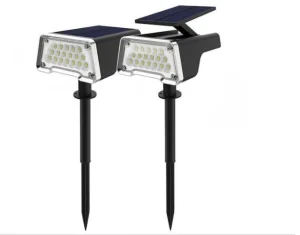
Factory Wholesale Roof Lights Waterproof Backyard Courtyard Lighting Solar Lights
View Specifications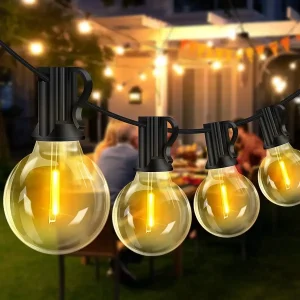
25FT Globe Garden Light Strand Commercial LED Bulbs G40 Solar String Lights Outdoor
View Specifications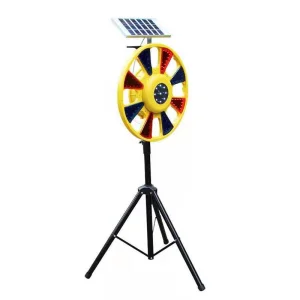
Bright Solar Rotary LED Emergency Traffic Warning Light
View Specifications
Durable Galvanized 9m Solar Street Light Pole for Parks
View Specifications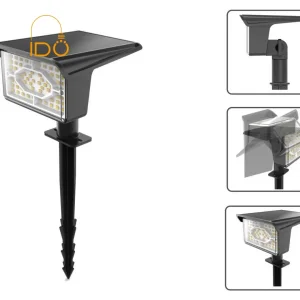
Decorative Solar Spike Lights for Landscape, IP64 Waterproof, Perfect for Garden and Fence
View Specifications
Super Bright Outdoor Solar Power Path Garden Lamp Remote Control Integrated Solar Street Light
View SpecificationsDecarbonizing Global Landscapes: Technical Blueprint of Modern Solar Decorative Lighting
The shift from traditional grid-tied high-voltage incandescent systems to autonomous, photochemically energized solid-state luminaires represents a key evolution in commercial landscaping. The core of this transition lies in modern photovoltaic conversion efficiency, micro-electrochemical storage performance, and optimized optical management systems.
B2B buyers, municipal planners, and global distributors require more than just ornamental fixtures; they demand engineering platforms capable of operating continuously under changing environmental conditions. Designing modern landscape architecture requires a deep understanding of solar radiation maps, battery chemistry under temperature stresses, and mechanical design that prevents environmental degradation.
Photovoltaic Architecture & MPPT Energy Harvesters
The efficiency of a solar luminaire depends on its PV collection systems. Modern professional architectural fixtures use N-type monocrystalline silicon solar cells, which are treated with Passivated Emitter and Rear Cell (PERC) technology to achieve efficiency rates up to 23.5%. Unlike older thin-film panels, these modules maintain stable performance even in low-light conditions, capturing diffused blue-spectrum wavelengths during cloudy or overcast days.
To manage this energy, modern luminaires utilize Maximum Power Point Tracking (MPPT) charge controllers rather than basic PWM systems. These MPPT microcontrollers actively monitor the solar panel's current and voltage outputs, adjusting the charging parameters to maximize energy transfer into the battery bank. This increases charging efficiency by up to 30%, which is essential for regions with limited sunlight or seasonal daylight shifts.
Advanced Battery Chemistry & Intelligent Management System (BMS)
Modern solar lighting systems rely heavily on advanced battery storage technology. Transitioning from Lead-Acid and Ni-Cd batteries to Lithium Iron Phosphate (LiFePO4) and ternary Lithium-Nickel-Manganese-Cobalt (NMC) batteries has significantly improved both performance and product lifespan. LiFePO4 cells are preferred for high-reliability systems because they offer over 6,000 charge-discharge cycles at 80% Depth of Discharge (DoD), along with excellent thermal stability.
Every system includes a dedicated Battery Management System (BMS). The BMS manages overcharge protection, over-discharge mitigation, thermal balancing, and short-circuit prevention. It also controls adaptive lighting patterns. If the battery charge drops due to consecutive rainy days, the BMS automatically adjusts the output of the constant-current LED driver to preserve battery life while maintaining essential illumination levels.
China Solar Manufacturing Ecosystem: B2B Operational Strengths
The continuous growth of our manufacturing footprint is rooted in China's robust photovoltaic and industrial electronics supply chain. While design and specification criteria are localized worldwide, our integrated factory leverages high-density supply chains to offer cost-efficient, customizable, and reliable production pipelines.
Our vertically integrated manufacturing facility in China handles every phase of production, from raw silicon ingots to final SMT electronics placement, precise plastic injection molding, automated powder-coating processes, and strict quality assurance testing. This integration speeds up product development cycles, enabling custom OEM modifications—such as custom color temperatures, modified optical lenses, or bespoke structural frames—in a fraction of the time required by fragmented suppliers.
Additionally, our quality management systems follow ISO 9001 and ISO 14001 standards. Every batch of luminaires undergoes rigorous testing, including thermal shock cycles, IPX6 and IPX8 ingress tests, salt spray exposure for coastal installations, and high-frequency vibration simulations. By maintaining these strict quality control protocols at the source, we ensure that our solar light products meet the performance and durability expectations of municipal, commercial, and residential projects worldwide.
About Our R&D and Manufacturing Operations
We began to develop solar lights in 2006, and never stop our step to find new tech and fashionable design of it. Due to our lasting developing and marketing promotion, solar lights have successfully replace thousands of inefficient electrical and gas powered post or wall lights.
Today, as premier China Solar Lights Manufacturers, Suppliers, and Factory, we operate advanced assembly lines, environmental test chambers, and precision optical laboratories. Solar lights are electric lights that are converted into solar energy by solar panels. During the day, even on a cloudy day, this solar generator (solar panel) can also collect and store solar energy. As a safe and environmentally friendly new light, solar lights have received increasing attention globally.
Read More About UsGlobal Compliance Frameworks & Localization Support
Navigating the complex regulatory landscape of different target markets is a key challenge for global B2B procurement managers. Different regions enforce strict safety, environmental, and performance standards. As an experienced exporter, we prioritize meeting these localized compliance frameworks to ensure smooth distribution and cross-border customs clearance.
- European Union (CE, RoHS, WEEE): Compliance with CE directives (EN 60598 series for general safety and EN 62471 for photobiological safety) is mandatory. RoHS compliance ensures that all materials are free from hazardous substances like lead and cadmium, while WEEE certification guides proper end-of-life battery and electronics recycling.
- North America (UL, FCC, Title 24): Compliance with FCC Part 15 Class B is required to prevent electromagnetic interference. Safety listings through ETL or UL (specifically UL 1598 for luminaires and UL 8750 for LED equipment) are essential for commercial projects and local utility rebate programs.
- Australia & Oceania (SAA, RCM): Structural integrity is key due to high UV indexes. Products are certified under the Regulatory Compliance Mark (RCM) and SAA standards, using UV-stabilized polycarbonate and marine-grade aluminum housing.
- Middle East & Africa (SASO, G-Mark): Products must withstand extreme temperatures (up to 60°C). Our custom designs for these regions feature high-temperature NMC or customized LiFePO4 battery chemistries, along with enhanced thermal management to prevent battery degradation in hot climates.
Localized Engineering and Architectural Scenarios
B2B applications require tailored lighting properties based on specific site layouts and spatial needs. Our OEM program matches these distinct requirements:
- Urban Municipal Parks & Walkways: Focused on pedestrian safety and public space aesthetics. These systems feature customized Type II and Type III optical distributions, along with built-in microwave motion sensors. The sensors dim the lights during inactive hours to conserve energy, switching to 100% output when motion is detected.
- Commercial Hospitality & Luxury Resorts: Focused on visual comfort, ambience, and warm color temperatures (2200K–2700K). These designs feature low-glare, dark-sky compliant optics that direct light downward, preventing skyglow and maintaining the natural landscape aesthetic.
- Industrial Perimeter Security: High-reliability lighting designed for remote boundaries and storage yards. These systems integrate high-output LED arrays, oversized monocrystalline PV modules, and larger battery banks to guarantee continuous operation for at least 5 nights, even during storms or winter seasons.
Frequently Asked Questions
Get answers to technical questions about our manufacturing capabilities, battery lifespans, materials, and OEM customization services.
Heavy-Duty & Specialized Solar Infrastructure
High-lumen streetlights, motion-activated road luminaires, and decorative structures designed to perform reliably in demanding outdoor environments.
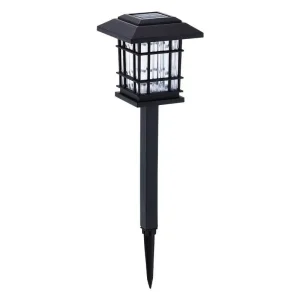
Outdoor Solar LED Ground Plug Lawn Light Waterproof Simulated Flame Garden Lamp
View Specifications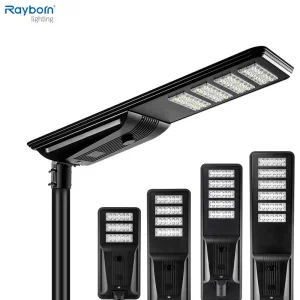
High Bright 200lm/W MPPT Motion Sensor Integrated All in One LED Solar Street Light
View Specifications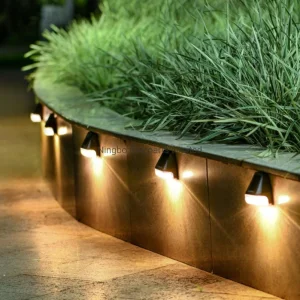
Wholesale Solar Powered Garden Lawn Decorative Lantern Quality LED Wall Lamp
View Specifications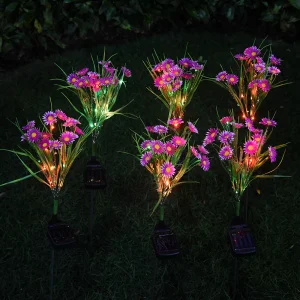
Solar Powered Deck LED Chrysanthemum Flower Decorative Light Outdoor
View Specifications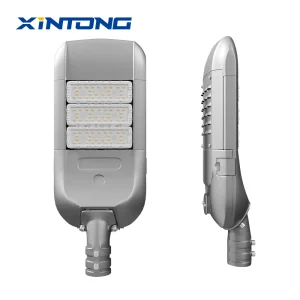
Xintong Solar High Powered Motion Sensor Waterproof IP67 All in One LED Street Light
View Specifications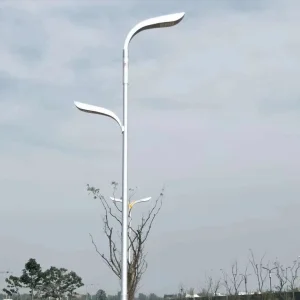
Solar Street Light for Government Road Lighting Project with Factory Price
View Specifications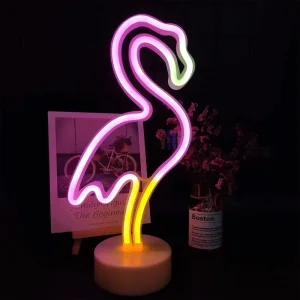
Landscape Aluminum Cylinder Pathway Solar Waterproof IP65 Garden Lawn Light
View Specifications